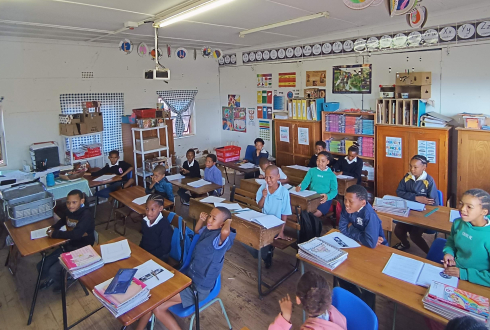
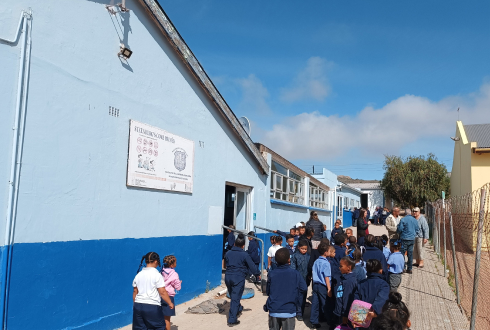
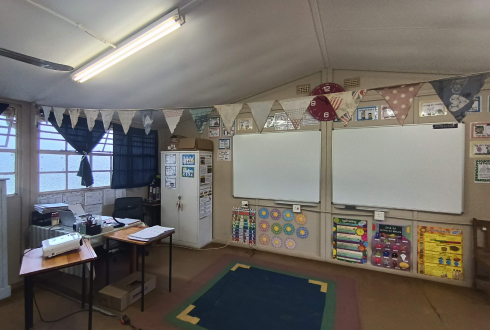
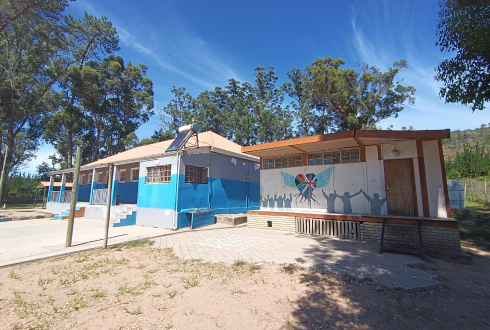
Our beliefs shape our approach to education, emphasizing innovation, inclusivity, and lifelong learning. We are dedicated to creating environments where every learner can thrive. We use the framework of Care and Support for teaching and learning. A joint initiative of SADC and the DBE to foster a conversation about quality in education in under-resourced communities.
01.
Future Preparation
Education (going to school) must prepare learners for a future that will require the ability to be lifelong learners. They need skills like problem solving, creative thinking and adaptability to change.
02.
Potential for Change
Every learner has the potential to change the world and all children can learn.
03.
Evolving Role of Teachers
We believe that the role of teachers has changed dramatically in the past 20 years. Teachers are no longer the main source of information, the focus is on learning and not only memorising and teachers need to actively engage learners intentionally as human attention is precious in a world of overstimulation.
04.
Leadership in Schools
School principals need to be the “lead teachers” valuing excellence in each and every classroom at all times.
In under-resourced environments, access to academic learning is classrooms. We need to ensure that classrooms are spaces that are conducive to enjoyable learning.
06.
Innovation in Education
We believe in innovation and the definition that “innovation in education means doing things with a better outcome, at a lower cost”.
07.
Digital Literacy
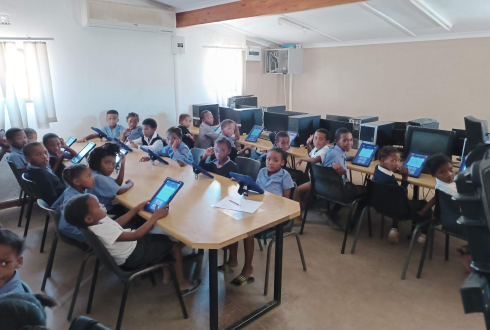
The age of technology and digital literacy necessitates innovation and the use of technology. Digital literacy is an essential component of quality education.
08.
Relationships
We believe that all of the above is underpinned by good relationships between teachers and learners and that children “do not learn from people they do not like”.